·event
Project Discovery: Mapping the Immune Response to COVID-19
Image: CCP Games · (c) CCP Games / project partners (used under CCP fan-content policy)
On 15 June 2020 the third phase of EVE Online's Project Discovery turned players onto human blood, tracing immune-cell populations in flow-cytometry data to map the body's response to COVID-19. A partnership with MMOS, McGill, BC Cancer and UNIMORE under Dr Andrea Cossarizza, it drew 41.4 million submissions in three months and won a 2021 Webby People's Voice Award, with CCP estimating the players saved scientists over 330 years of research.
Project Discovery: Mapping the Immune Response to COVID-19
On 15 June 2020, with the first wave of the coronavirus pandemic still cresting, Project Discovery turned its third dataset into the most timely thing EVE Online had ever asked its players to do. The minigame had spent a year sorting proteins for the Human Protein Atlas (see Project Discovery - Citizen Science Inside EVE) and a stretch hunting exoplanets in telescope data (see Project Discovery: Hunting Real Exoplanets). Phase Three pointed the same crowd of capsuleers at human blood, and at a single question: how does the immune system respond to SARS-CoV-2?
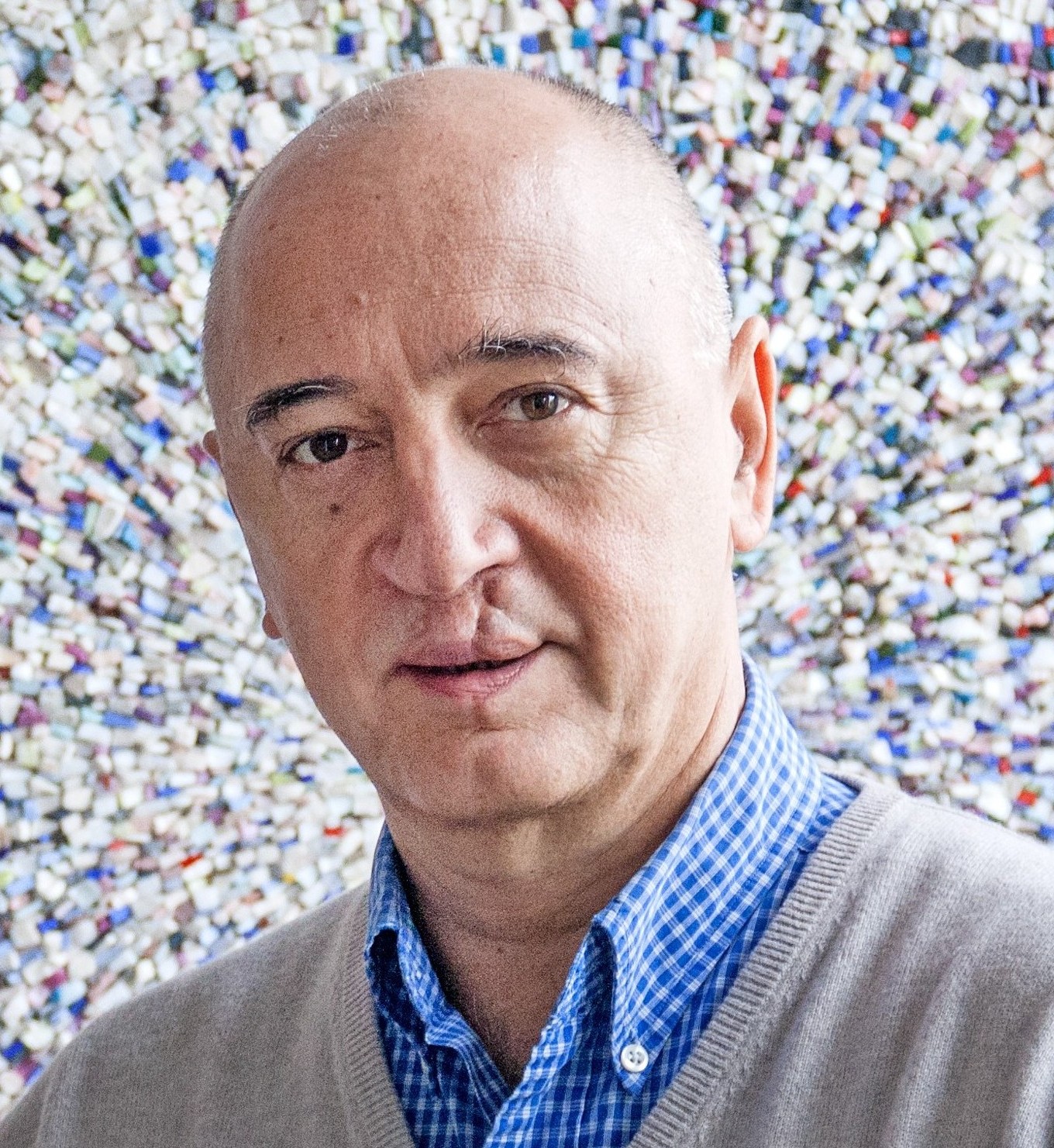
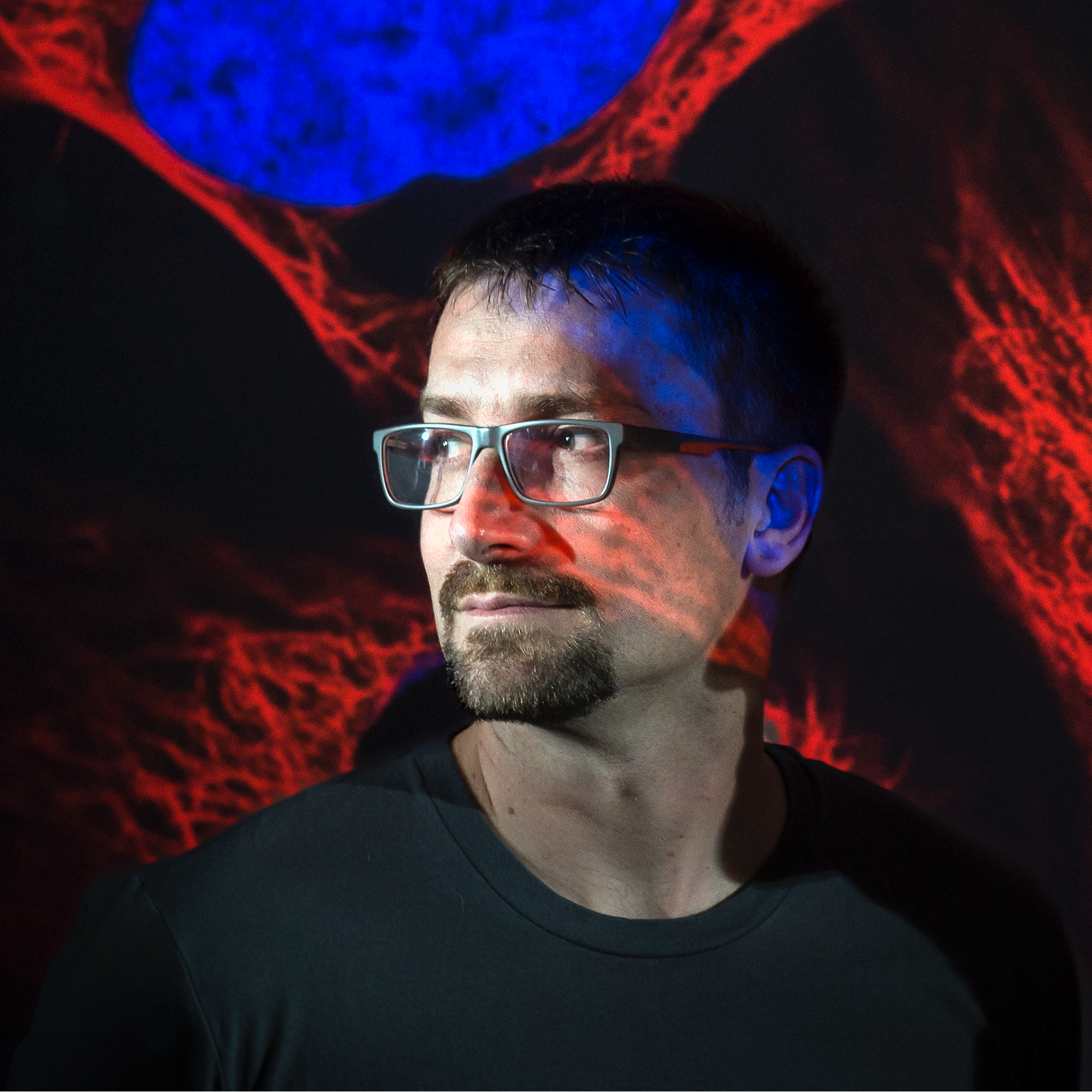
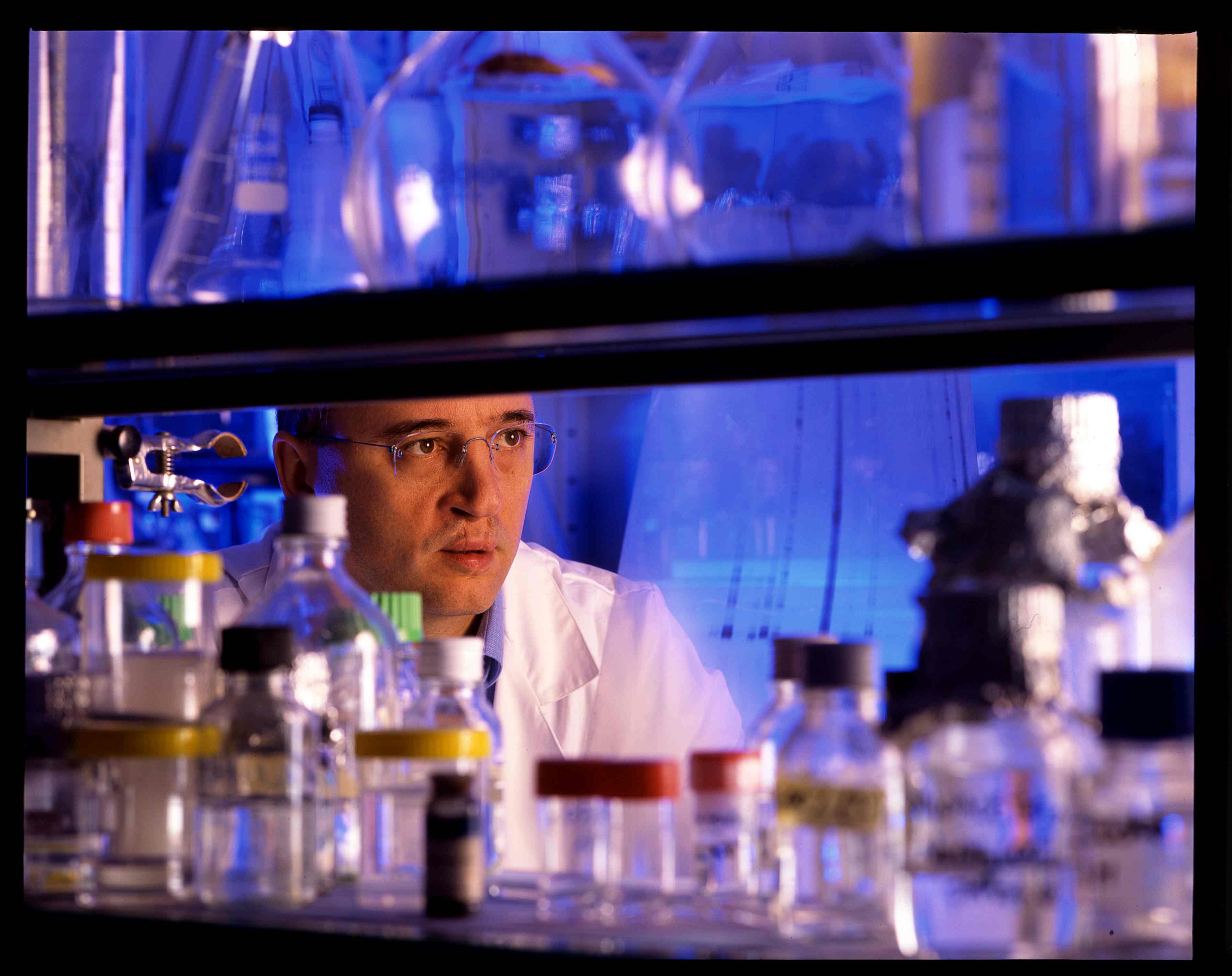
It was again a CCP Games and MMOS collaboration, but the scientific roster was the widest yet. McGill University led the data work under Associate Professor Jerome Waldispuhl; BC Cancer and the University of British Columbia handled the learning algorithm under Dr. Ryan Brinkman; the University of Modena and Reggio Emilia (UNIMORE) brought front-line COVID-19 clinician Dr. Andrea Cossarizza, a Professor of Immunology who would also become the in-game face of the phase. The University of Pennsylvania supplied data, and the International Society for the Advancement of Cytometry, the International Clinical Cytometry Society and the European Society of Clinical Cell Analysis backed the data-sharing effort. The idea had come together in weeks: MMOS co-founder Attila Szantner's team surfaced a suitable dataset, and CCP assembled a small strike force to ship the phase fast. It launched alongside a separate CCP charity drive, a revived PLEX for Good campaign that ultimately raised 135,550 US dollars for the WHO's COVID-19 Solidarity Response Fund and the Johns Hopkins Center for Health Security.
How it worked
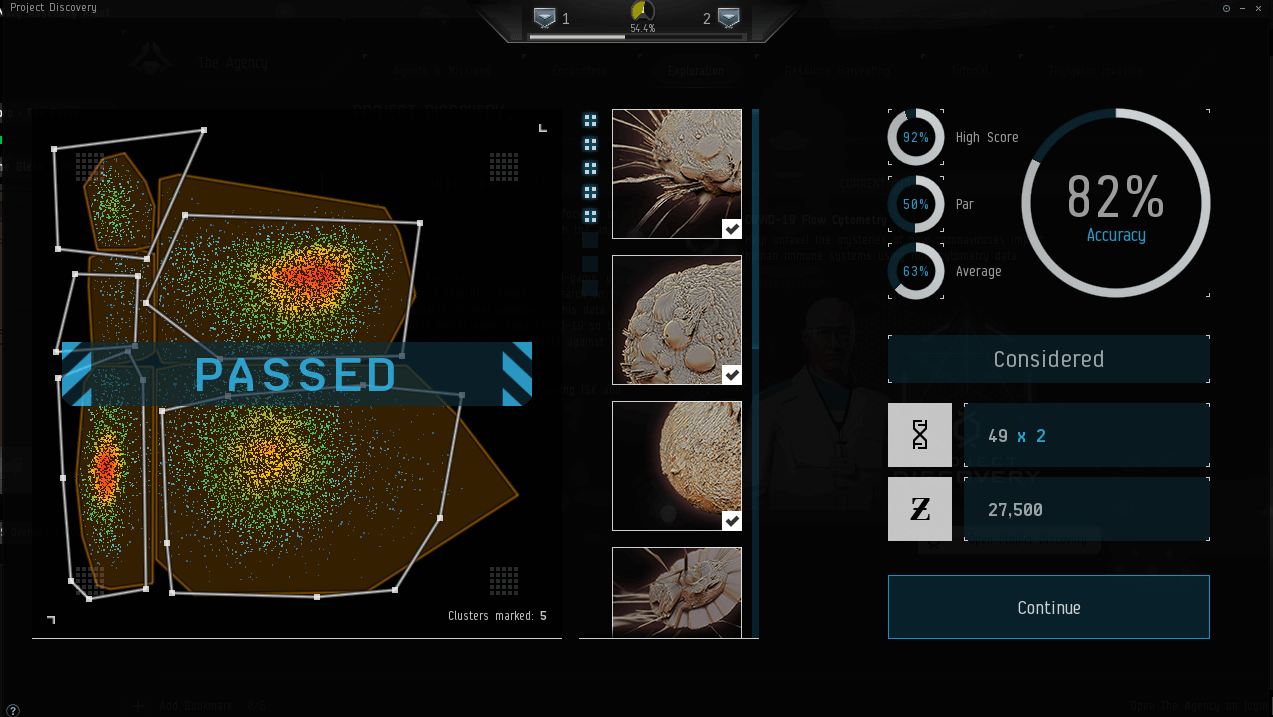
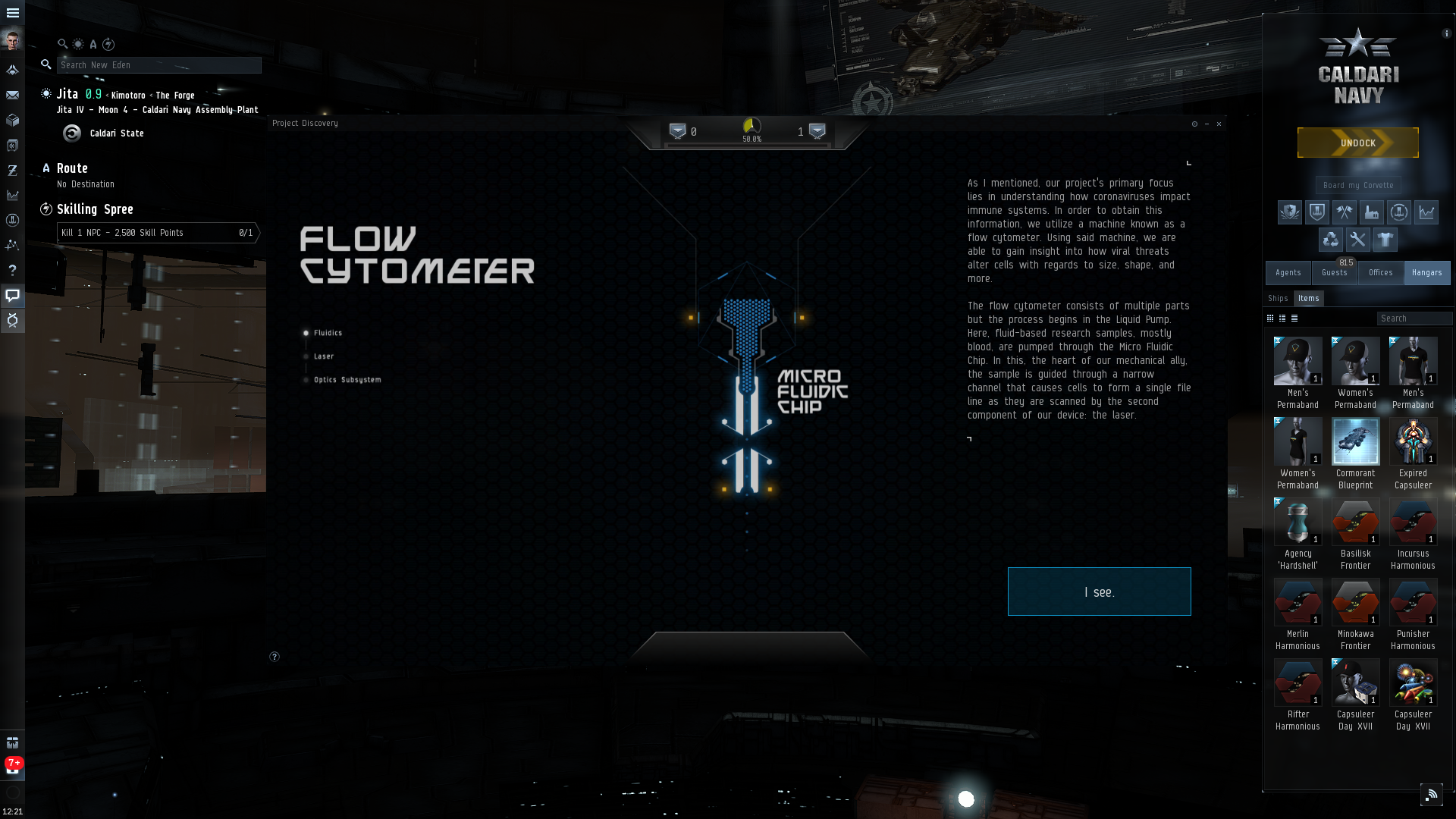
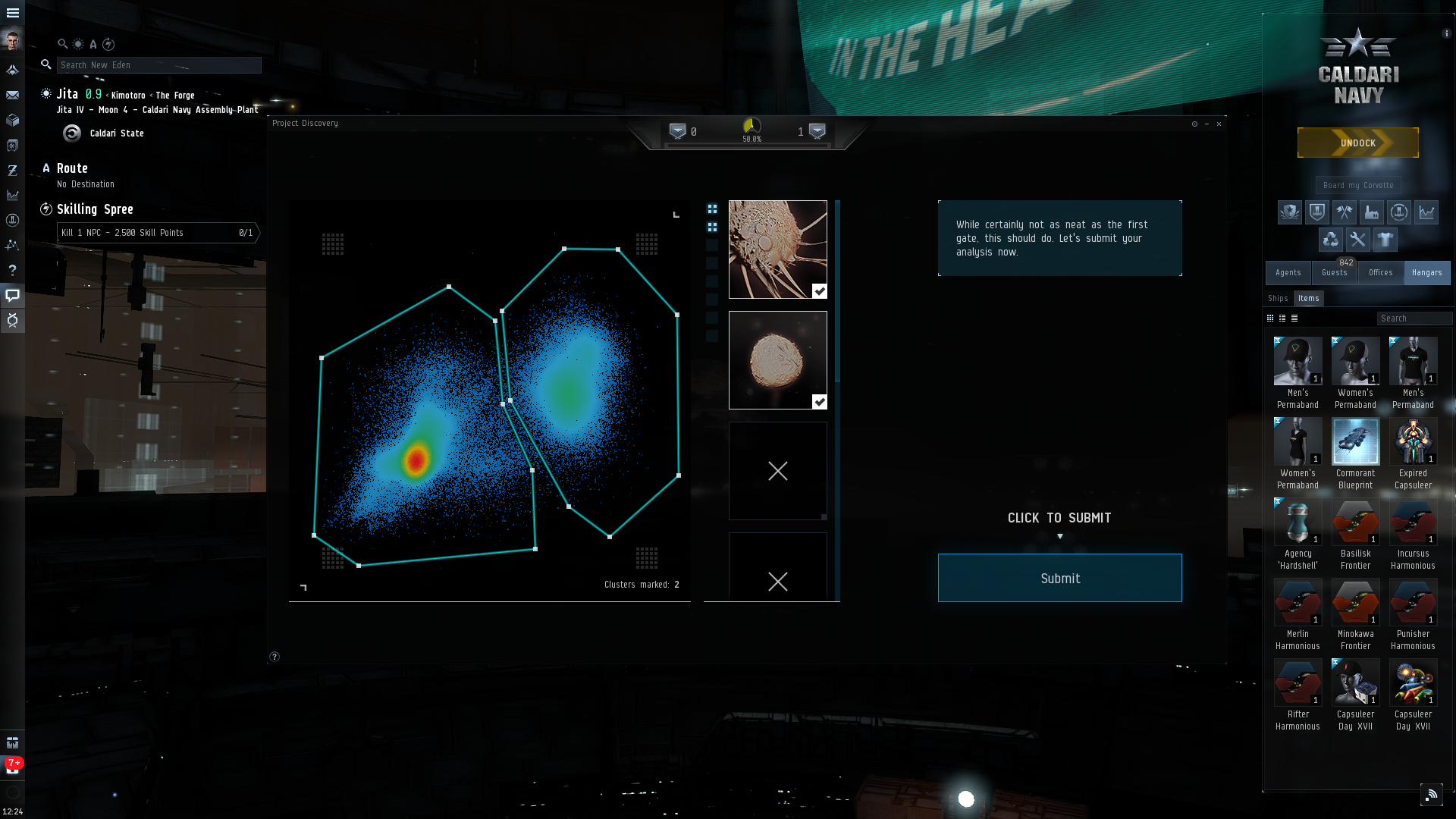
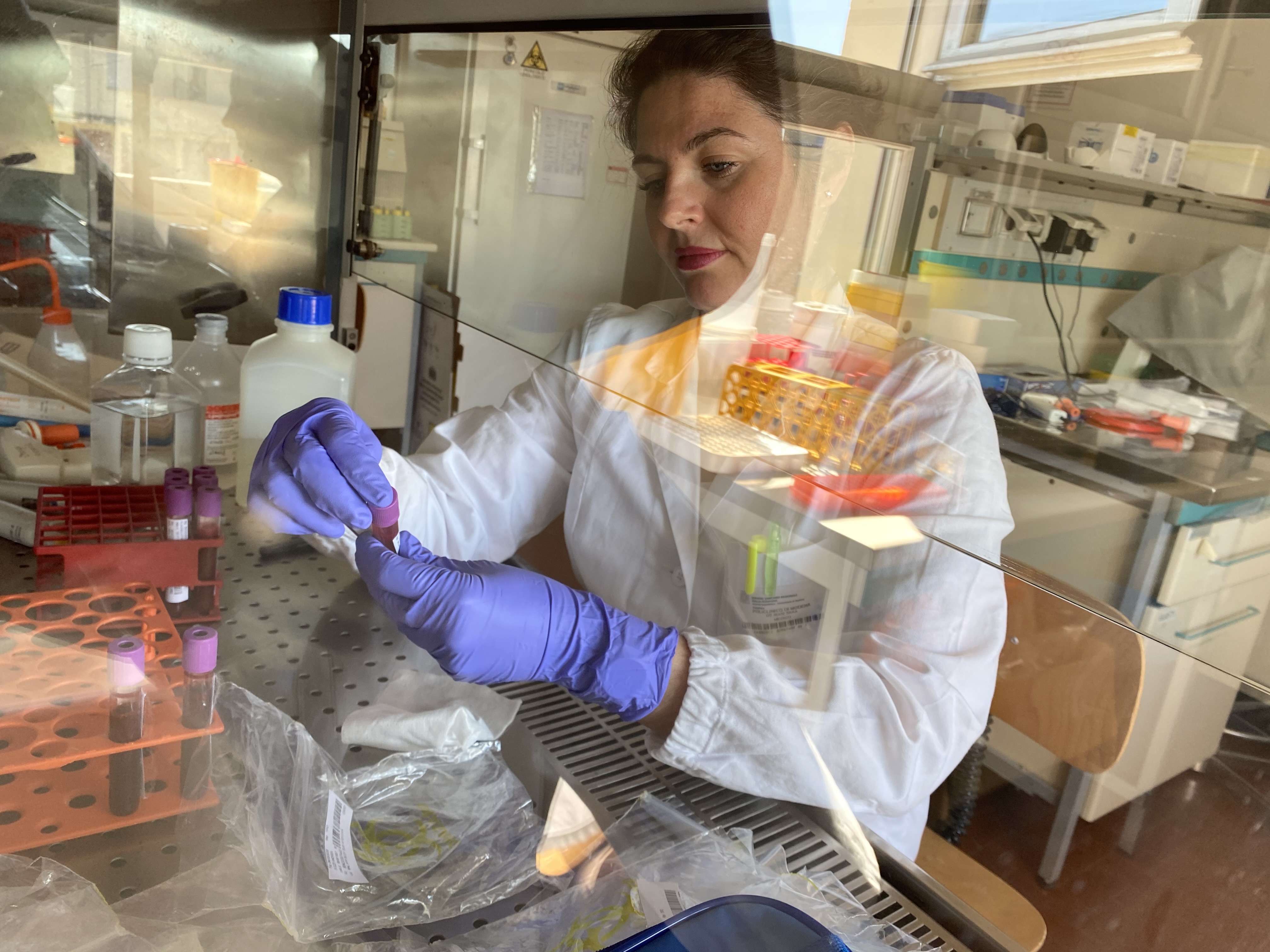
The science was flow cytometry, a decades-old technique that suspends blood cells in a fluid, fires them single-file past a laser, and measures the physical and chemical signatures of each one. The output is not a picture but a cloud of points, and reading it means finding the boundaries between cell populations inside that cloud. A single patient produces around forty such graphs, which together form a three-dimensional map of how the virus alters the immune system, and each graph can hold roughly 200,000 data points. Solving one patient by hand took a trained analyst up to an hour. That is the bottleneck the players were aimed at.
Inside the EVE client, the task was a tracing tool. A capsuleer drew a polygon around a cluster of cells on a graph, separating one population from its neighbours; once enough players reached a consensus on a region, that area was promoted to its own graph for finer analysis. The verified output was meant to teach a machine-learning algorihtm to do the same job at scale. As with the earlier phases, the work paid in in-game rewards and could be done entirely from the safety of a station, and players who logged in were greeted by an in-game Dr. Andrea Cossarizza, who introduced the cell-tracing minigame before they began.
A rocky handover
The switch from exoplanets to cell biology landed badly with the players who had ground the previous phase hardest. The transition reset everyone's Project Discovery rank to zero, wiping progress toward the lucrative Marshal blueprint that the exoplanet phase had dangled, and the official forum thread filled with capsuleers who had been a few levels short. "I was at lvl 449, so close to the mashall BPC," one wrote, "and now i should start again at lvl0?" A second source of friction was the daily submission cap, which struck players as self-defeating for a pandemic-data drive: "THERE IS A HARD DAILY LIMIT? WHY? If you want us to drown you in data to fight the current pandemic, why are we hard capped?" The new task was also genuinely harder to read than protein images had been, and player-written guides reaching for analogies, one comparing a cell cluster to "a comet and you're isolating the head from the tail with your polygons," only underlined how ambiguous the work felt at first.
A pandemic-speed sprint
The grumbling did not slow the throughput. By 22 September 2020, barely three months in, CCP reported that players had made 41.4 million submissions, of which more than 466,000 had already been verified and cleared for use in research, with some 157,000 active participants averaging 264 classifications each. With that momentum CCP and the scientists asked the community to "level up" into a harder tier of more complex submissions, the kind that would sharpen the accuracy of fresh COVID-19 data and feed it back to the wider scientific world.
The developers were openly startled by the scale. "The current phase of Project Discovery is perhaps one of the most timely issues we have ever engaged in and the response from players has been nothing short of astounding," said EVE Online Creative Director Bergur Finnbogason, adding that the effort was "proof that we can once again achieve the impossible over the insurmountable." Brinkman was blunter about what the data meant for his field: "There is simply no other resource out there for this anywhere close to what is now being generated." Cossarizza, watching from a country then among the hardest hit in Europe, framed the players' accuracy as something past a game, "actually a real fight against COVID."
The Webby and the verdict
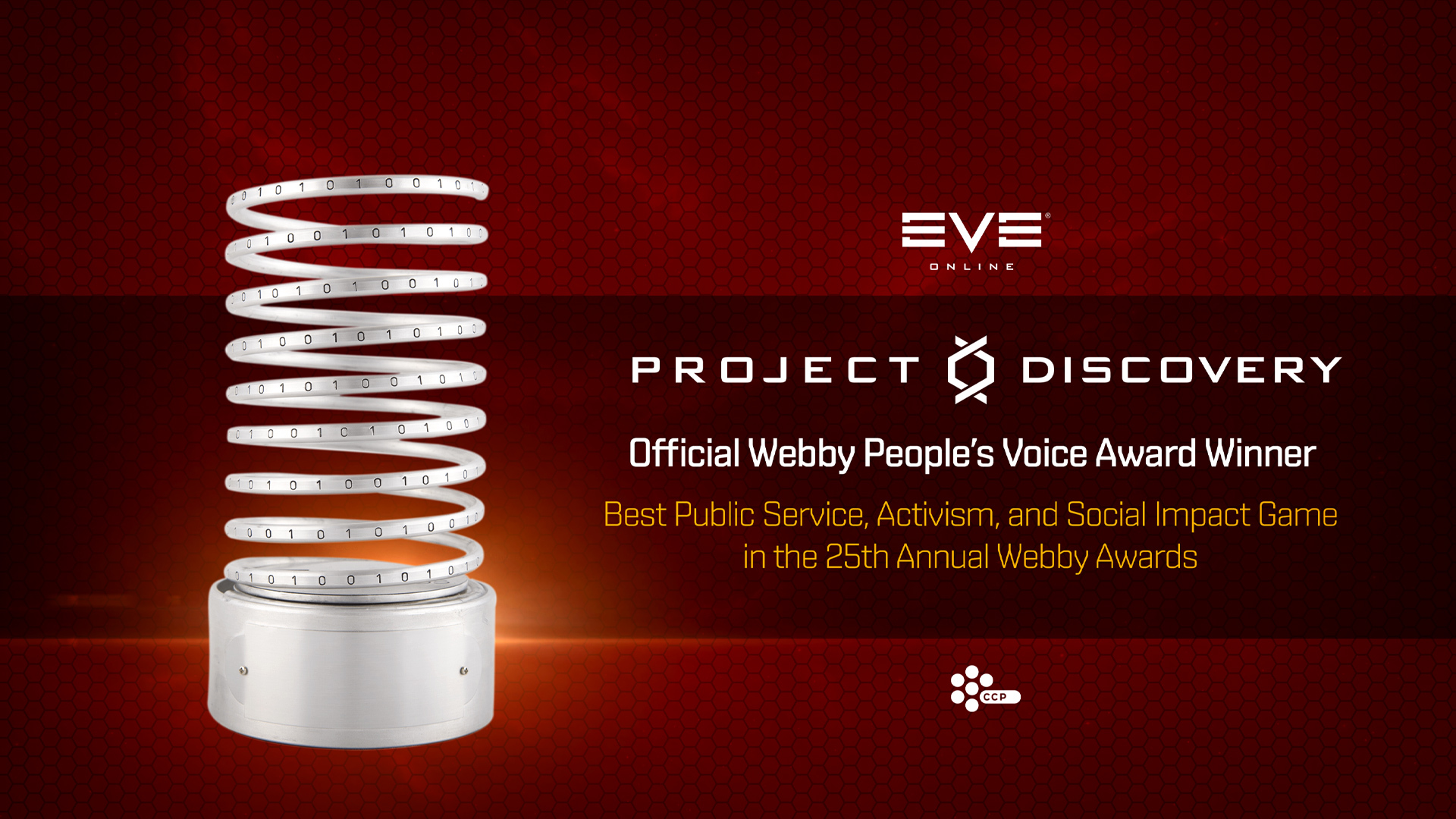
The recognition arrived the following spring. On 18 May 2021, Project Discovery was named the People's Voice Winner in the Games: Public Service, Activism, and Social Impact category at the 25th Annual Webby Awards, the honour The New York Times once called "the Internet's highest honor." By the time of the win, CCP's tally for the COVID-19 phase had grown to 327,000 players making over 115 million data submissions, work the studio estimated had saved scientists over 330 years of research into how the disease affects blood cells and the immune system.
What the scientists found most striking was not the volume but the accuracy. Brinkman's team later sat down and played the same plots the capsuleers were grading, then built tools to extract the single best answer from a crowd of around 500 players and compared it against the professionals; the aggregate of the gamers, he reported, did better, simply because there were more of them. Finnbogason used the Webby moment to reach back across the whole arc, crediting capsuleers with "a real dent in the scientific landscape, from the first 'fictional' cover on a major scientific journal to new discoveries to saving scientists precious years by training algorithms." Szantner, who had spent six years arguing that video-game crowds could do real science, admitted the award "was way beyond our wildest dreams" when MMOS started. The COVID-19 phase did not cure anything by itself. What it produced was a freely shared, machine-readable dataset of human-verified immune-cell classifications, generated at a speed no laboratory could match, at the exact moment the world needed it most, and the flow-cytometry tracing work it pioneered would carry straight into a fourth phase aimed at cancer (see Project Discovery: The Fight Against Cancer).
Gallery



Sources
- CCP press release - Fight COVID-19 by playing EVE Online in new phase of Project Discovery (2020-06-15)
- CCP press release - CCP Games calls on EVE players to level up within the COVID-19 project (2020-09-22)
- CCP press release - Project Discovery wins Webby People's Voice Award for Public Service (2021-05-18)
- VentureBeat / GamesBeat - Project Discovery scientists on EVE Online players' contributions (Rachel Kaser)
- Massively Overpowered - Project Discovery tasks players with helping research COVID-19 (Chris Neal, 2020-06-15)
- Massively Overpowered - EVE players submitted over 41M COVID classifications (Bree Royce, 2020-09-22)
- Game Developer - An EVE Online mini-game is helping researchers better analyze COVID-19 data (A. McAloon)
- TechRaptor - EVE Online Project Discovery Lets You Fight COVID-19 (Patrick Perrault)
- CGMagazine - EVE Online Is Saving Real-World Scientists Hundreds of Years In COVID-19 Research
- EVE Online forums - New Project Discovery COVID-19 (launch reception + progress-reset thread)
- The Nosy Gamer - Project Discovery: COVID Edition (2020-06)
- Imperium News (INN) - Capsuleers Against COVID: a closer look at the latest Project Discovery (Hai Ren)
- CCP press release - EVE players donate over USD 130,000 to COVID-19 relief via PLEX for Good (2020)
- EVE University Wiki - Project Discovery