·expansion MAJOR
Crius - Industry Overhaul
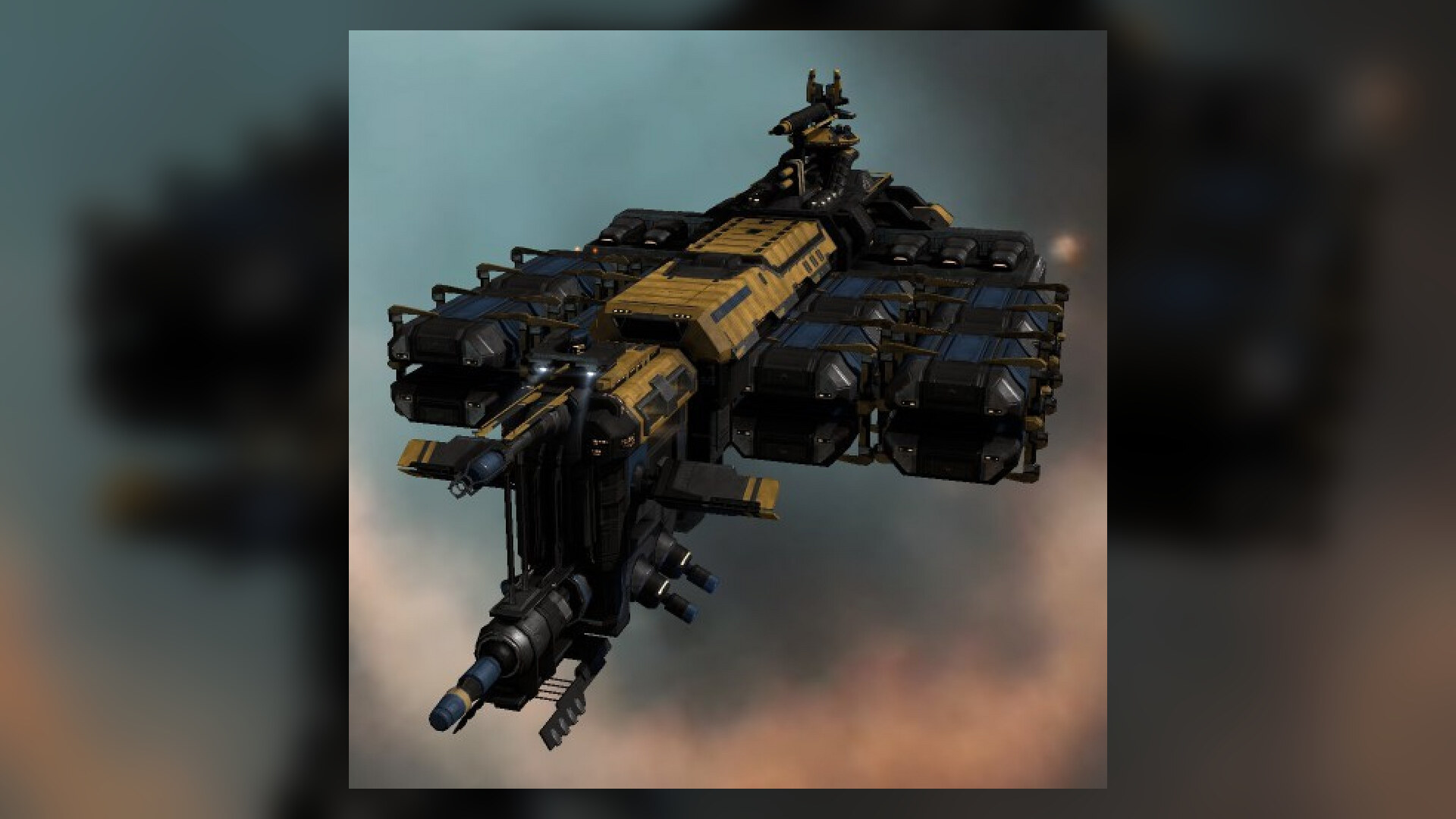
Image: CCP Games · (c) CCP Games (used under CCP fan-content policy)
Manufacturing, research, and copy jobs were rewritten. Stations now charge variable taxes via system cost indices that rise with activity.
Crius - what changed
Background
EVE Online: Crius shipped on 22 July 2014 and is the largest single overhaul of EVE's industry system in the game's history. CCP described it as touching "everything from how player-constructed starbases function, to spaceship blueprints, to basic asteroid composition." Manufacturing slots were removed; the Science-and-Industry interface was replaced; blueprint research math was rebased to ME 0-10 / TE 0-20; reprocessing math was rewritten; POS labs lost their slot-monopoly; system cost indices were introduced; and a short-lived Industrial Teams auction system was added (and quietly killed a year later in Galatea).
For a returning player, Crius is the single most consequential expansion to read up on if you ever did anything industrial - the mental model from 2013 is wrong on almost every axis.
What changed, by playstyle
Industry
If you were an industrialist in 2013, Crius is the single biggest mechanical change you missed. The Science-and-Industry window is gone. Manufacturing slots are gone. Blueprint research math is rebased. The whole game-design assumption that "industry capacity is something you get by owning lab slots" disappeared on 22 July 2014 and was replaced by "industry capacity is something you choose by picking a less-busy system." For the first time, regional system cost indices meant a Jita-region build job cost meaningfully more than a quiet-nullsec build job - and the spread is large enough to drive real logistics decisions. The Teams auction system that headlined Crius was killed quietly the following year, but the system-cost-index model that Crius introduced is still the spine of how EVE industry works in 2026.
Mining
Crius's mining-side story is mostly about reprocessing. If you came back from 2013, your mental model of "drop ore at the station, hit reprocess, get 100% minerals" is wrong - NPC stations now cap at 72.4% efficiency, and the gap between 72% and the player-structure 100% is the financial incentive that built nullsec compression industry as we know it. The good news is that ore yields per unit went up ~38% to compensate, so casual highsec miners did not see their hourly ISK collapse. The bigger structural story is compression: Crius's POS Compression Array was the first time you could right-click ore in cargo and shrink it for jump-freighter export, and that mechanic is what made it economic to mine in deep nullsec at all.
Trading
Crius is the moment regional system cost indices started showing up in trader spreadsheets. Before Crius, where you built things didn't matter much - the cost was the materials and a fixed slot fee. After Crius, the same blueprint costs measurably more in busy-system Jita than in a quiet nullsec station, and that delta is large enough to drive supply-side geography. If you're returning in 2026 and re-learning the Jita meta, two Crius-era facts still matter: the compressed-ore trade is a structural feature of nullsec import logistics, and "where this T1 hull was built" is sometimes the answer to a price-spread question that doesn't otherwise make sense.
Aftermath / what stuck
The compression-and-cost-index reframing is the architectural foundation that nullsec industry is still built on in 2026, and the Reddit / forum corpus around manufacturing and mining all assumes Crius's framework as the baseline. Citadels (April 2016) layered structures on top of this foundation; Lifeblood (October 2017) layered active moon mining; but the mechanical spine of EVE industry was set on 22 July 2014. The catch-up arc for serious industrialists is canonical: Crius -> Citadel -> Ascension EC -> Lifeblood Refinery, in that order. The industrial Teams auction system was removed in Galatea (2015) - flagged here so a returning player isn't confused if they see references to Teams in retrospectives but can't find them in-game.
What changed for you
compare across expansions ->Top picks · highest impact across all playstyles
-
5
Industry
Manufacturing slots were removed entirely - the old per-station "queue your job behind 30 other people" bottleneck disappeared and was replaced by a system-wide cost index that scales job cost with how busy a system is, decoupling capacity from station infrastructure for the first time.
-
5
Industry
A new map-driven Industry tab replaced the old Science-and-Industry interface, surfacing material costs, system indices, and team modifiers in one calculation; the SCI window most returning players remember from 2013 is gone.
-
4
Mining
Reprocessing math was completely rewritten - maximum NPC-station efficiency dropped from 100% to 72.4%, but mineral yields per unit of ore rose ~38% across the board to compensate; the practical effect was a hard nudge toward player-owned reprocessing arrays for serious miners.
All changes by playstyle (12 changes across 3 playstyles)
Industry
Industry across all expansions ->-
5
Manufacturing slots were removed entirely - the old per-station "queue your job behind 30 other people" bottleneck disappeared and was replaced by a system-wide cost index that scales job cost with how busy a system is, decoupling capacity from station infrastructure for the first time.
-
5
A new map-driven Industry tab replaced the old Science-and-Industry interface, surfacing material costs, system indices, and team modifiers in one calculation; the SCI window most returning players remember from 2013 is gone.
-
4
Blueprint Material Efficiency rebased to a 0-10 scale with each level cutting required materials by 1% (max 10% saving), and Time Efficiency to 0-20 scale at 2% per level (max 40% saving) - the old percentage-on-percentage stacking is gone, and existing blueprints converted automatically on patch day.
caveat
Old "perfect" 50%-ME BPOs were not nerfed - they converted to ME 10 (1% × 10 = 10% saving) which is the new math's effective equivalent of the 10%-of-base-materials saving that ME 50 represented under the old 5,3,2,1,1,1... formula.
-
3
POS labs lost their special-case slot advantage - Mobile Labs, Research Labs and Design Labs got new multipliers (0.7x ME/TE research, 0.6x copy, 0.5x invention) but stations and outposts gained equivalent infrastructure, ending the long-standing "POS-or-bust" calculus for serious researchers.
-
2
Industrial "Teams" were introduced - auctioned crews you bid on for a 7-day system-wide manufacturing/research bonus; in retrospect a stillborn feature (removed in Galatea 2015) but it was a Crius headline and the in-game bidding interface still echoes through later auction-style systems.
caveat
Teams were quietly removed in the 2015 Galatea release - auction participation was rare and the bonus values were too small to drive system-choice decisions.
-
4
Reprocessing math was completely rewritten - maximum NPC-station efficiency dropped from 100% to 72.4%, but mineral yields per unit of ore rose ~38% across the board to compensate; the practical effect was a hard nudge toward player-owned reprocessing arrays for serious miners.
-
3
All ores and ices unified to require 100 units per reprocessing batch (previously varied per ore); reprocessing math became uniform and finally predictable for casual miners doing the "right click -> reprocess" flow.
-
3
POS Reprocessing Arrays got a Compression Array companion, letting POS operators compress ore directly out of cargo with a right-click; compressed ore volumes shrank dramatically without changing mineral output, transforming nullsec ore-export logistics.
-
2
Faction-warfare upgrades shifted from giving station industry slots to providing -10%-per-level NPC industry cost reduction (max 4 levels = 40% off), tying mining/industry incentives to factional warfare participation in a new way.
Trading
Trading across all expansions ->-
4
Regional cost indices made manufacturing location a market signal for the first time - Jita-region build cost is now visibly higher than quiet-nullsec build cost, and traders started routing manufacturing through cheaper-index regions, materially shifting the supply-side geography of common-T1 markets.
-
3
Compressed ore became a trading commodity in its own right - pre-Crius the ore-vs-mineral arbitrage was tedious; post-Crius the volume reduction made compressed-ore freight a standard low-risk Jita import for nullsec industrialists.
-
2
Reprocessing fee structures changed - NPC stations charge more, player structures less, and standings-based reprocessing tax now matters for traders running a reprocessing arbitrage between regions.
Impact score 1-5 (5 = paradigm shift for that playstyle).